

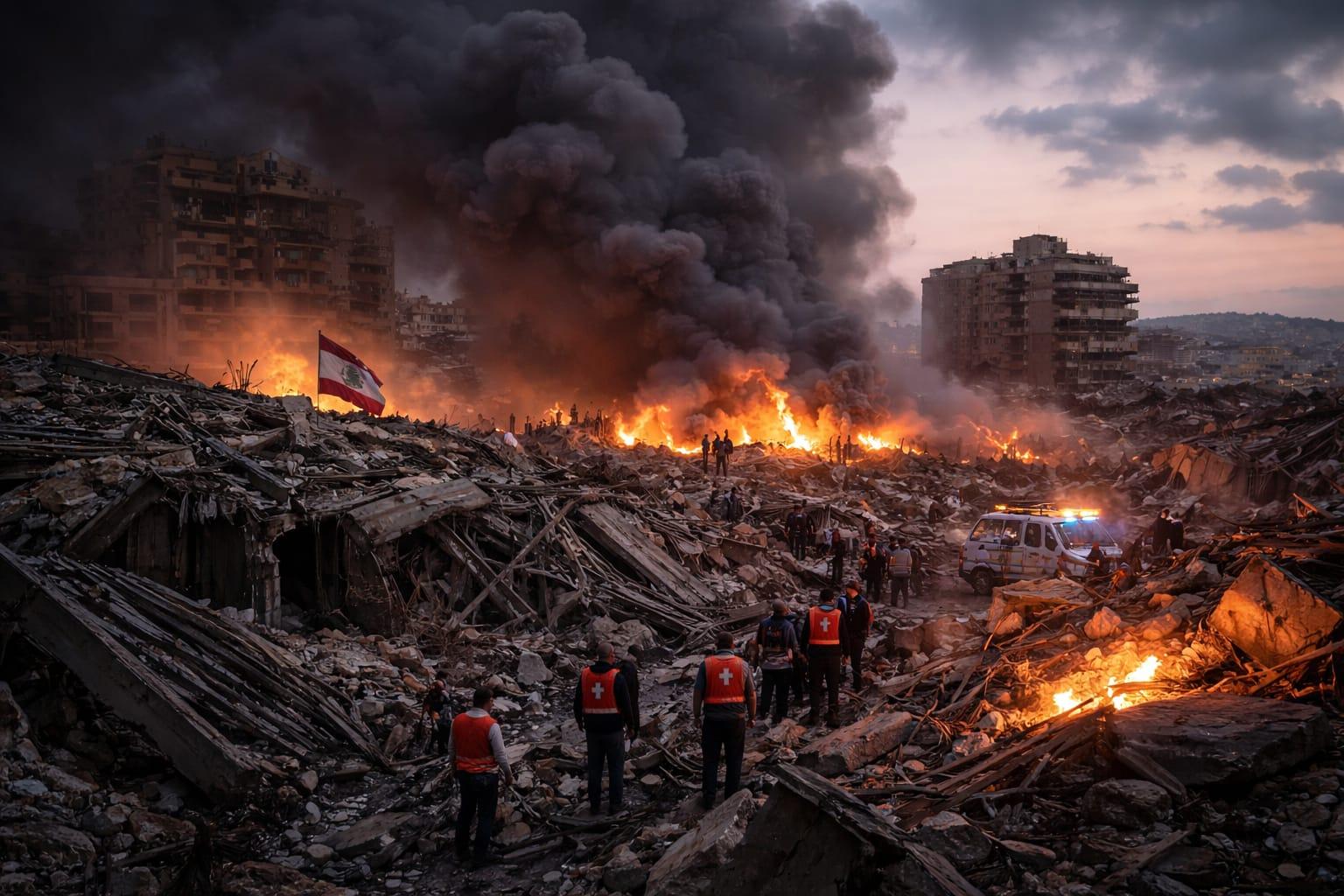
Beirut/Washington/Tehran: Hopes for stability following the recently announced ceasefire between the United States and Iran are rapidly fading, as the situation across the Middle East has sharply deteriorated over the past several hours, according to emerging reports from international media. Intensifying Israeli airstrikes in Lebanon, renewed cross-border hostilities involving Hezbollah, and strong warnings from Iran have collectively undermined the fragile truce, pushing the region closer to a wider conflict.
Heavy Strikes in Lebanon Push Death Toll Higher:
According to international media reports, Israeli airstrikes across Lebanon have not only continued but intensified since the ceasefire came into effect. The death toll has now risen to more than 250, with over 1,000 people reported injured. Strikes have hit multiple areas including Beirut, southern Lebanon and the Bekaa Valley, causing widespread destruction to residential neighborhoods, roads and critical infrastructure. Emergency response teams are facing difficulties accessing the worst-hit areas, raising concerns that the number of casualties could increase further. The United Nations and humanitarian organizations have expressed deep concern, describing the scale of civilian casualties as alarming.
Hezbollah Resumes Attacks Amid Escalating Border Clashes:
While Hezbollah had initially paused its operations following the ceasefire announcement, recent reports indicate that the group has resumed rocket fire towards Israeli positions. Cross-border exchanges have intensified, signaling a rapid escalation along the Lebanon-Israel front. The renewed hostilities have significantly increased the risk of a broader regional confrontation.
Iran Issues Strong Warning, Questions Ceasefire Viability:
Iran has strongly condemned the ongoing strikes in Lebanon, labeling them as acts of aggression and warning of possible consequences if the attacks continue. Iranian officials have suggested that such developments could jeopardize the ceasefire arrangement, raising the possibility of renewed direct or indirect confrontation in the region.
Strait of Hormuz Tensions Raise Global Concerns:
The situation in the Strait of Hormuz has once again emerged as a critical flashpoint. Reports indicate heightened Iranian monitoring of maritime traffic, with some reports suggesting possible delays in shipping movement. The uncertainty has triggered fresh concerns in global energy markets, given the strategic importance of the waterway for international oil supplies.
Gulf States on High Alert Amid Security Fears:
Across the Gulf region, countries including Saudi Arabia, the United Arab Emirates, Kuwait and Bahrain remain on high alert. Air defense systems have been fully activated amid fears of potential missile or drone attacks. While no major casualties have been confirmed in recent hours, the prevailing security environment remains tense, with authorities maintaining heightened vigilance.
Diplomatic Efforts Continue Amid Worsening Ground Reality:
On the diplomatic front, the United Nations, the European Union and other global actors have intensified efforts to de-escalate tensions and push for a broader and more durable ceasefire. However, the situation on the ground appears to be moving in the opposite direction, with continued military actions and retaliatory threats undermining confidence in diplomatic initiatives.
The latest developments following the ceasefire indicate a significant worsening of the situation across the Middle East. Rising casualties in Lebanon, the resumption of hostilities by Hezbollah, strong warnings from Iran and mounting tensions in the Strait of Hormuz all point to a rapidly escalating crisis. Analysts warn that unless immediate and coordinated diplomatic intervention is undertaken, the current fragile ceasefire could collapse entirely, potentially triggering a wider regional war with serious global implications.