

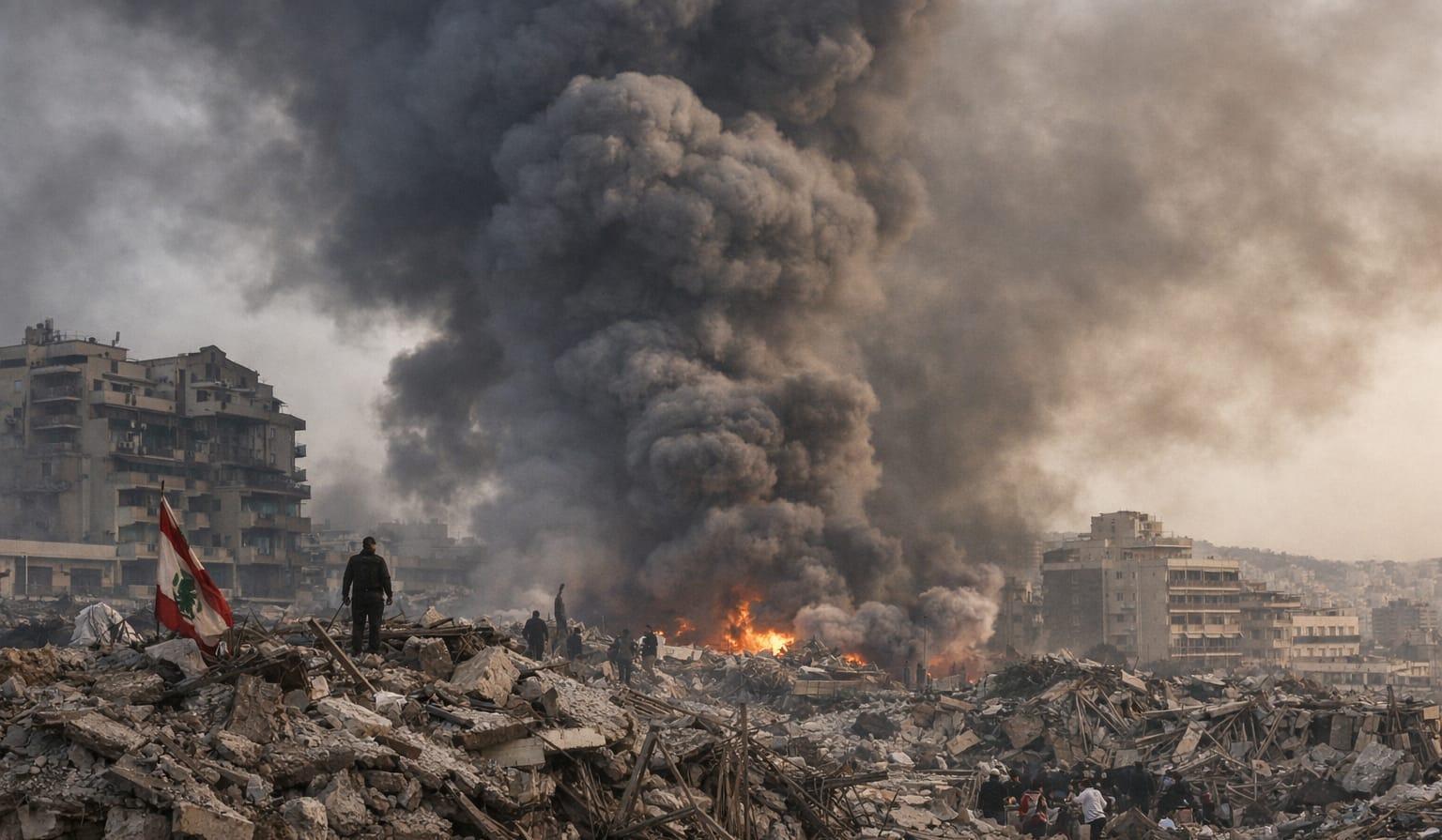
Beirut/Washington/Tehran: The fragile ceasefire announced between the United States and Iran came under immediate strain as fresh violence erupted across the Middle East, with Lebanon witnessing large-scale airstrikes within hours of the truce, raising serious questions about its effectiveness.
According to international media reports, including Al Jazeera and other global outlets, Israel launched extensive air raids across Lebanon shortly after the ceasefire took effect. The Lebanese Health Ministry said that at least 89 people were killed and more than 700 injured in the strikes, including members of medical staff. Analysts noted that the casualties were reported from a single day of bombardment, underlining the intensity of the attacks.
The strikes targeted multiple locations, including Beirut, the Bekaa Valley and southern Lebanon, with more than 100 sites reportedly hit. Several residential buildings were flattened, while roads, power infrastructure and essential services suffered significant damage. Rescue operations have reportedly faced difficulties in heavily affected areas, raising fears that the death toll could rise further.
In a significant development, Hezbollah is reported to have temporarily paused its attacks following the ceasefire. However, Israeli military operations continued. U.S. officials clarified that the ceasefire agreement with Iran does not extend to Lebanon, where a separate front involving Israel and Hezbollah remains active. The position has further heightened tensions in the region.
Iran strongly condemned the strikes and warned that it could reconsider its commitment to the ceasefire if attacks on Lebanon continue, fueling concerns of renewed escalation into a broader conflict.
The ceasefire between Washington and Tehran, brokered for an initial two-week period, involved a halt to direct U.S. and allied strikes on Iran, while Tehran agreed to reopen the Strait of Hormuz. However, developments in Lebanon have exposed the limitations of the agreement.
Meanwhile, Gulf countries remain on high alert despite the truce. Saudi Arabia, the United Arab Emirates, Kuwait and Bahrain have heightened air defense readiness amid concerns over missile and drone threats. Reports of attempted attacks in parts of the region have surfaced, with authorities claiming interceptions by defense systems.
Initial and unconfirmed reports of incidents such as a fire at the Habshan gas facility in the UAE and an attempted drone strike targeting a key oil pipeline in Saudi Arabia suggest that risks to critical energy infrastructure persist despite the ceasefire.
Maritime traffic through the Strait of Hormuz has partially resumed, but uncertainty continues to weigh on global markets, particularly oil supplies. The European Union and other international actors have welcomed the ceasefire while urging sustained diplomatic efforts to convert it into a lasting agreement.
Analysts describe the current situation as a “fragile ceasefire,” where direct confrontation between the United States and Iran has temporarily eased, but regional flashpoints—particularly Lebanon—remain highly volatile. They warn that unless hostilities on these fronts are contained, the limited truce could quickly unravel into a wider regional conflict with far-reaching geopolitical and economic consequences.