

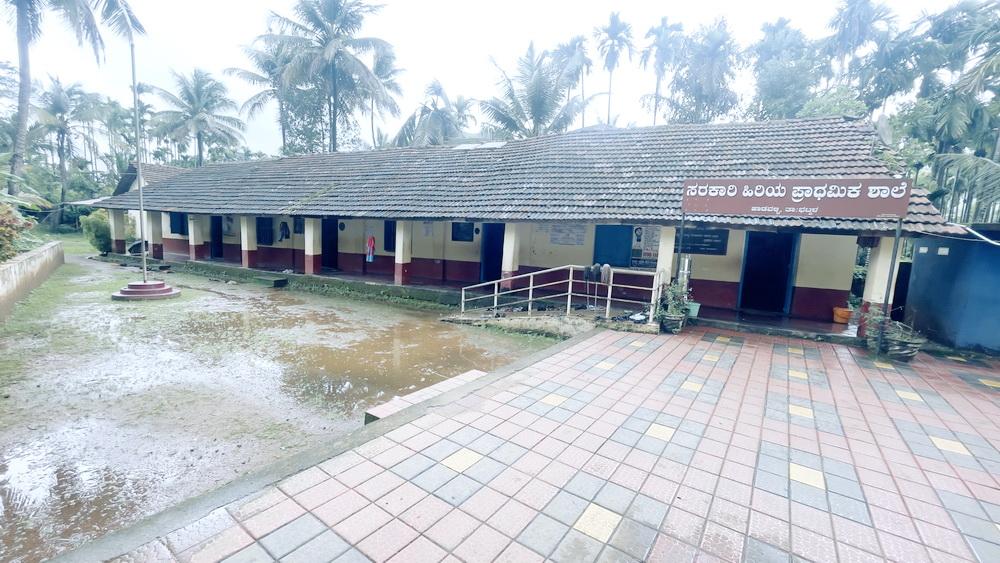
Bhatkal: In the quiet agrarian village of Haduvalli, a border village in Bhatkal taluk of Uttara Kannada district adjoining Sagar taluk of Shivamogga district, education continues under the shadow of a crumbling school building. The Government Higher Primary School, which has served generations of children for nearly six decades, is now grappling with severe structural deterioration, forcing students to attend classes in rooms riddled with deep cracks, beneath leaking roofs and on damaged floors, while a long-pending proposal for a new school building is yet to receive government approval.
Once known as Sangeetapura (the village of music) during the reign of Queen Rani Chennabhairadevi, Haduvalli has long since lost the musical heritage that once defined it. Today, agriculture and horticulture remain the primary sources of livelihood for residents, whose aspirations are no different from those elsewhere—they want their children to receive quality education and build better futures.
The Government Higher Primary School caters to students from Classes I to VII and currently has an enrolment of 72 children. Despite being located in a remote border village, the school follows a bilingual education model with emphasis on English language learning. Four teachers, including two on contract, are posted at the institution. Owing to its strategic location, the school also attracts children from neighbouring villages in Sagar taluk of Shivamogga district, making it an important government school for children living on both sides of the district boundary.
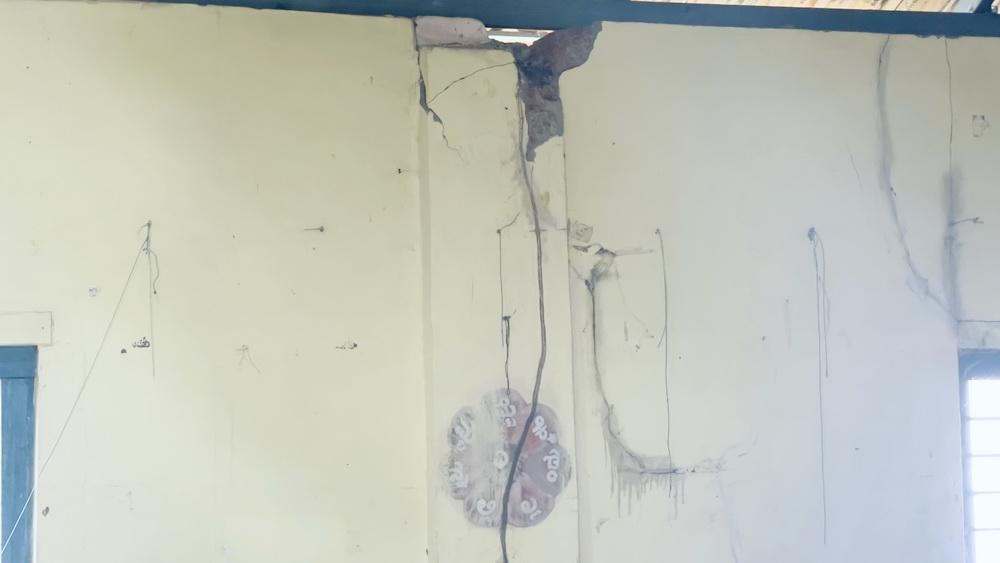
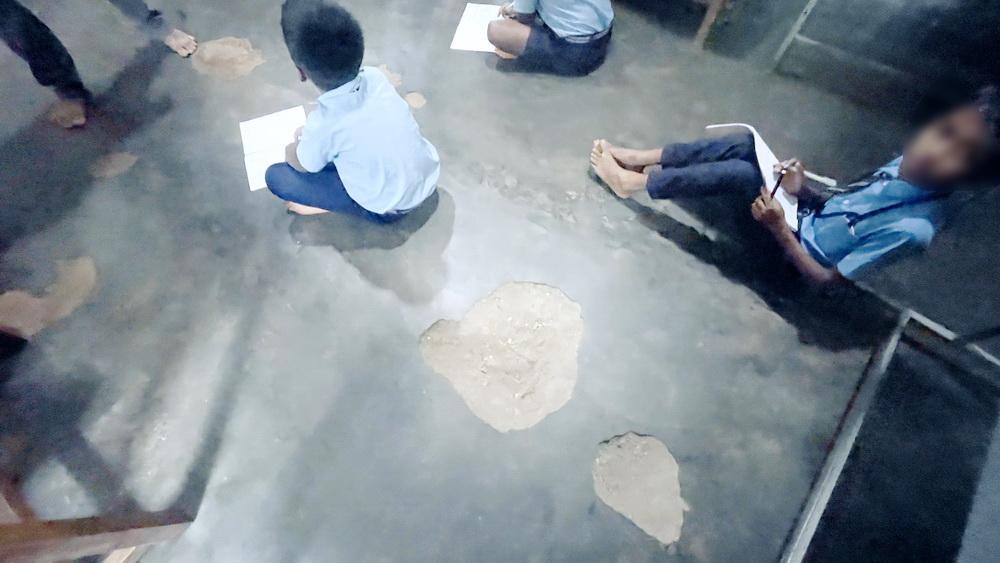
The school's ageing structure comprises five classrooms, most of which have developed extensive cracks in the walls. During the monsoon, rainwater seeps through the roof into classrooms, disrupting academic activities and raising serious safety concerns. While two classrooms have received temporary repairs with sheet roofing, the remaining rooms continue to deteriorate. Even the headmaster's office is affected by the same structural damage. The classroom floors, worn out over decades, have developed potholes and uneven surfaces, further exposing students to risk.
The deteriorating infrastructure extends beyond the classrooms. The school premises become increasingly difficult to navigate during the rainy season due to poor ground conditions, adding to the challenges faced by students, particularly younger children.
Although a proposal for constructing a new school building has already been submitted to the government, approval is still awaited. The school's midday meal kitchen has also deteriorated with age. To prevent rainwater from entering the cooking area, staff have improvised by covering the roof with tarpaulin sheets secured with coconut fronds and other materials, enabling the preparation of meals under temporary arrangements.
Teachers declined to speak on record about the condition of the school, saying they were unable to comment publicly. Their reluctance underscores the constraints faced by the staff even as concerns over student safety continue to mount.
The infrastructure crisis is not confined to the school alone. The adjacent anganwadi building also developed major structural cracks and was declared unsafe. About six months ago, the anganwadi was shifted to a newly constructed classroom located on higher ground within the school campus. A separate proposal seeking approval for a new anganwadi building has also been submitted and is awaiting government sanction.
For the residents of Haduvalli, the school represents far more than a government institution—it is the foundation upon which the village's future depends. Until a new building is sanctioned and constructed, students in Haduvalli will continue attending classes in ageing classrooms where deteriorating infrastructure continues to cast a shadow over their education.